
Route optimization: Is your fleet driving 30% too far?
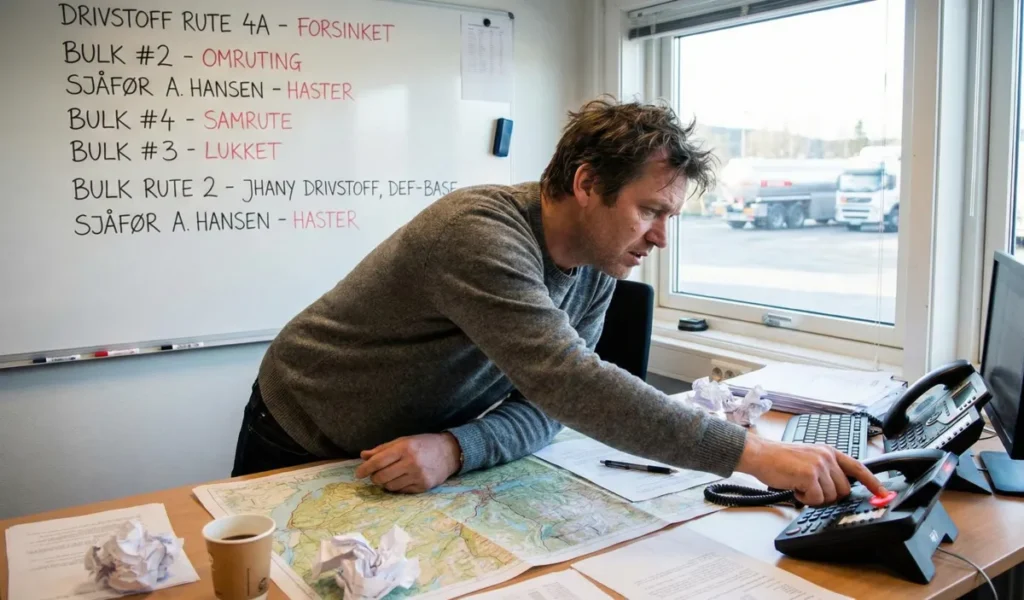
Monday morning. The tanker truck starts its route at six. First stop: a diesel tank that was filled three days ago. It's still 70% full. Second stop: a tank that ran out over the weekend.
The driver didn't know. The scheduler didn't know. Nobody had data. Everyone was working on the same schedule as last week, and the week before that. It's always been that way.
The problem isn't that people are doing a bad job. The problem is that traditional route planning is based on guesswork dressed up as routines.
Fixed routes, variable consumption
Most fuel distributors operate on fixed routes on fixed days. The tanker runs the same route every Tuesday. This provides predictability and fills the calendar. But here's the catch: consumption varies, and it varies a lot.
A construction site in full operation empties its tank in four days. The same tank in a quiet week lasts for twelve. Weather changes consumption. Season changes consumption. Project phases change consumption. But the route? It's the same.
The result: some tanks are visited too early, others too late. The driver drives to places that don't need refilling, while the phone rings from places that do. Empty driving at one end, emergency calls at the other.
15-25%
of kilometers driven are unnecessary with traditional route planning, industry data shows.
What it actually costs
Let's do the math. A tanker truck driving 200 kilometers a day, five days a week. With 20% excess driving, we're talking 40 kilometers per day. 200 kilometers a week. Over 10,000 kilometers a year — per car.
With diesel prices and wear and tear, each kilometer costs between 8 and 12 kroner. That quickly amounts to 100,000 kroner a year. Per car. Do you have five cars? Half a million.
And that doesn't include the driver's time, emergency calls outside of working hours, or customers who choose a competitor because they ran out of fuel the one time it really mattered.
Why doesn't everyone do this?
The market for remote sensing of tanks is growing by over 20% annually according to Berg Insight ( https://www.berginsight.com/the-global-remote-tank-monitoring-market ). It is a clear signal: the industry is moving towards data-driven logistics. Yet the majority of fuel suppliers still operate without real-time data on customer tanks.
Why?
Four barriers remain:
Traditional solutions were expensive
Sensors with unstable SIM cards, professional installation, annual licenses. It quickly became unprofitable for customers with low consumption. Modern solutions use universal SIMs that seamlessly switch between operators based on coverage, which provides far better reliability.
Installation took time
Installing sensors on hundreds of tanks requires logistics and resources. Especially in peak season, when the focus is on deliveries, not projects.
Customers were skeptical
“Too complicated.” “Not worth the trouble.” Many who have never tried don't know what they're missing.
Bad experiences
Older generations of navigation equipment were unreliable. Sensors that stopped working after a winter. Batteries that died. Those that tried ten years ago burned themselves out.
The result is that the majority of tanks out there are still measured manually — or not at all. Those who take the step will gain a competitive advantage.
The math has changed.
The old barriers held water when the alternative was expensive one-time investments and uncertain technology. The situation today is different.
Modern solutions remove investment risk. No sensor purchases. Low installation costs. Fixed monthly price that covers everything — hardware, software, support, maintenance. The subscription pays for itself with one avoided emergency delivery per quarter.
That means the threshold for getting started is lower than ever. You don't need 50 cars to see the impact. One driver who doesn't have to drive to a tank that didn't need to be filled is a win. One customer who gets a warning before their tank runs out is a win.
20-30%
Distributors using real-time tracking report fewer urgent deliveries, according to industry data.
From guesswork to real-time
The solution is simple in principle: don't drive to tanks that doesn't need to be refilled. Drive where the need is. But to know where the need is, you need data.
With level sensors on the tanks, you know exactly how much is left in each container. Not an approximation. Not based on last week's numbers. Now.
Then you can plan dynamic routes. The system tells you which tanks that actually need refilling tomorrow, next week, in two weeks. You group stops geographically based on real need, not calendar routines.
ROI you can measure
The figures from the industry are consistent. Dynamic route planning based on real-time data provides:
15-30% lower fuel costs for the fleet . Fewer kilometers means less diesel.
30-40% reduction in total delivery costs when you include labor time, wear and tear, and overhead.
At Soolo, we see that customers with real-time monitoring get 30% fewer emergency calls . That's not a theoretical calculation. It's what happens when you actually know the levels.
Integrate with what you have
There are good route planners out there. You don't need to switch systems. What you need is the right input to the system you have.
Modern navigation solutions offer open APIs. Tank data flows directly into your route optimization. The route planner doesn't have to check multiple systems. Everything is in the tool they already use, just with better numbers.
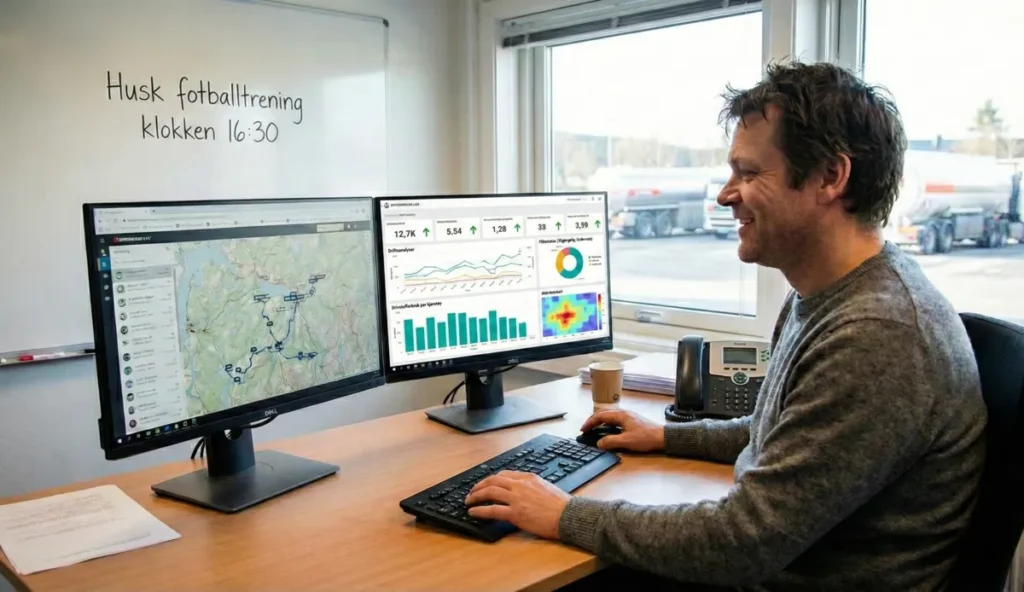
One overview of all tanks . Real-time level. Forecasts of when each tank will hit the order limit. Not complicated, just useful.
No route optimization without data
Fixed routes were the best we had before sensor technology became affordable and reliable. It made sense when the alternative was to call around or drive and check manually.
But now there is an alternative. It costs less than empty driving. It saves more than the subscription. It makes everyday life easier for drivers, trip planners and customers.
The question is not whether you can afford real-time data. The question is whether you can afford to continue without it.