
API-first IoT: Why open integrations are essential for ERP and tank data
Last week we received the same question from three different customers: “Can we connect the tank levels directly into our ERP system?”
Not “is there an app”, not “can I see it on my mobile”. They wanted the data where they already work. In their own systems.
This shift tells us something. Standalone solutions, those that live in their own bubble, are no longer sustainable. Customers demand data that flows freely between the systems they use.
Locked-in IoT systems are losing ground in an API-first world
Many IoT vendors are still building closed ecosystems. Your data lives in their portal, and if you want it out, you have to manually export CSV files. Maybe once a month, if you remember.
It worked in 2015. In 2026, it is no longer good enough.
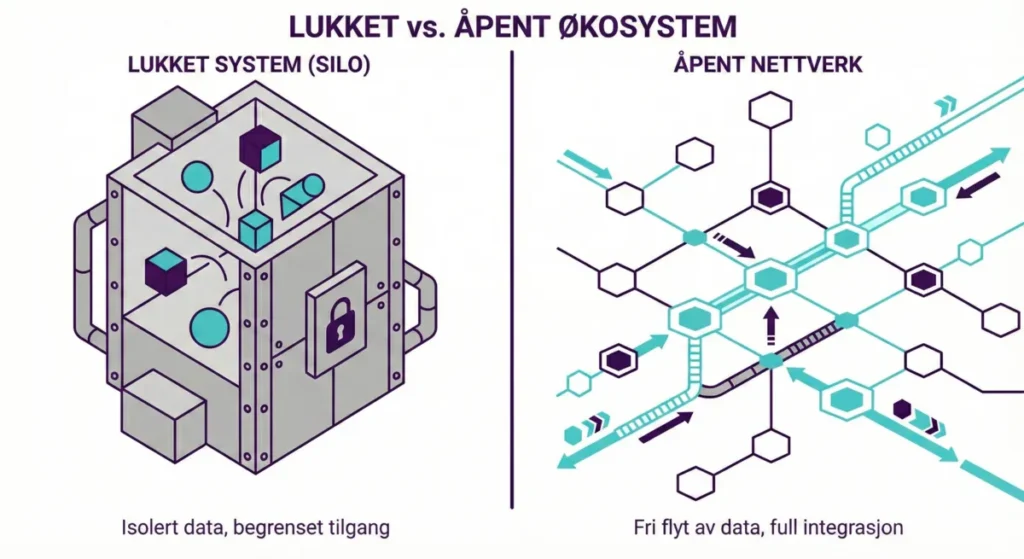
The reality of modern businesses is complex. Companies have ERP systems, billing systems, route planners, BI tools, CRM. All of these systems need data to function optimally. And they need the data automatically, in real time, without anyone having to sit around typing numbers from one screen to another.
"Integration with existing systems" has gone from being a nice competitive advantage to a minimum requirement. Suppliers that do not offer open APIs are simply being eliminated.
What customers use API tank data integration for
When we ask our customers why they want to integrate tank data with other systems, the same answers come up again and again:
ERP integration of tank data
Tank data flows directly into SAP, Visma or Microsoft Dynamics. Inventory is updated automatically. No manual counting, no discrepancies between physical and registered inventory.
Automated invoicing based on tank data
For rental tanks and filling services: the invoice is automatically generated based on consumption data. No more estimates and recalculations.
Route planning with real-time data
The scheduling system sees which tanks that is nearing empty – including the estimated number of days until refills are needed. The route is automatically optimized. The result? 30% fewer emergency calls for several of our customers.
Business Intelligence with IoT data
Consumption data into Power BI or Tableau. Trends over time. Seasonal variations. Forecasts for when the tank needs to be filled next.
How we build API-first IoT integration
We built Soolo as an API-first company from the ground up. This means that our portal , the app that customers log into, uses the exact same API that you have access to.
We use our own API internally – every single day.
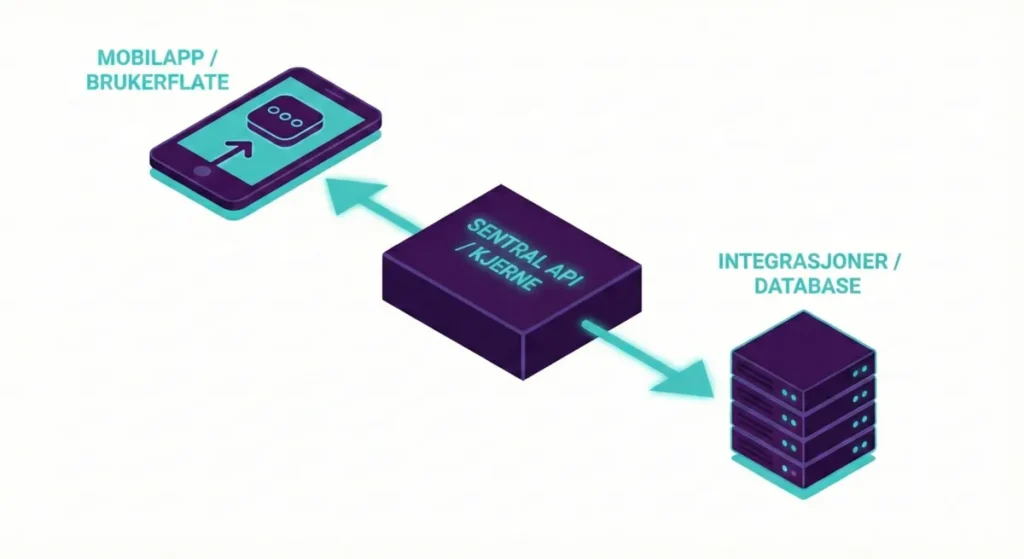
Practically, that means:
- REST API with full documentation
- Alerts when alarms are triggered – low level, critical level, or fill detected
- No additional charge for API access (it's included in the subscription)
Each data package contains much more than just level in percent. You get volume in liters, saleable volume, refillable volume, estimated days to empty, GPS position and temperature. All available via the same API.
We see IT departments appreciate this. They don't have to ask for special customizations or wait for the vendor to “prioritize” the integration project. They just pull the data and build what they need.
API integration provides control over tank data
Customers who integrate tank data with their own systems gain something valuable: control over their own data.
They are not locked into one vendor's view, one vendor's reports, one vendor's way of doing things.
Will they build an internal dashboard that combines tank data with weather forecasts and electricity prices? Great, the data is available. Will they create automatic orders when the level drops below a threshold? They have the API, they can code it themselves.
30%
fewer emergency calls for customers using integration with route planning
A final thought
The next time you consider an IoT solution, ask this question: “How do I get the data into my systems?”
If the answer involves manual exports, proprietary formats, or “it’s coming in a future version,” alarms should go off.
Your data should work for you – and it should be accessible via open APIs.